Enquire Now
Latest News
Textiles and Garments Exports from India

Textiles and Garments Exports from India

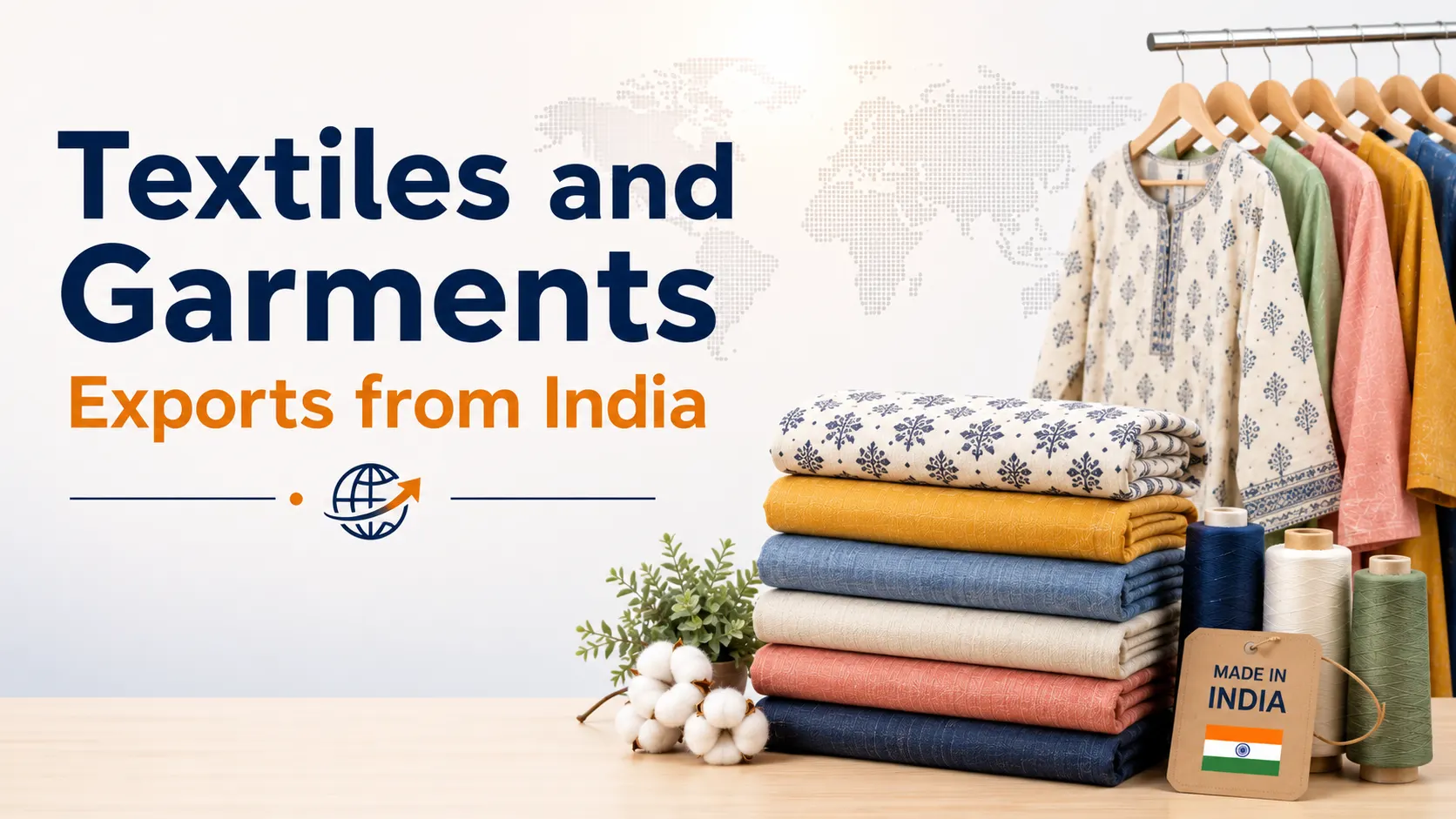
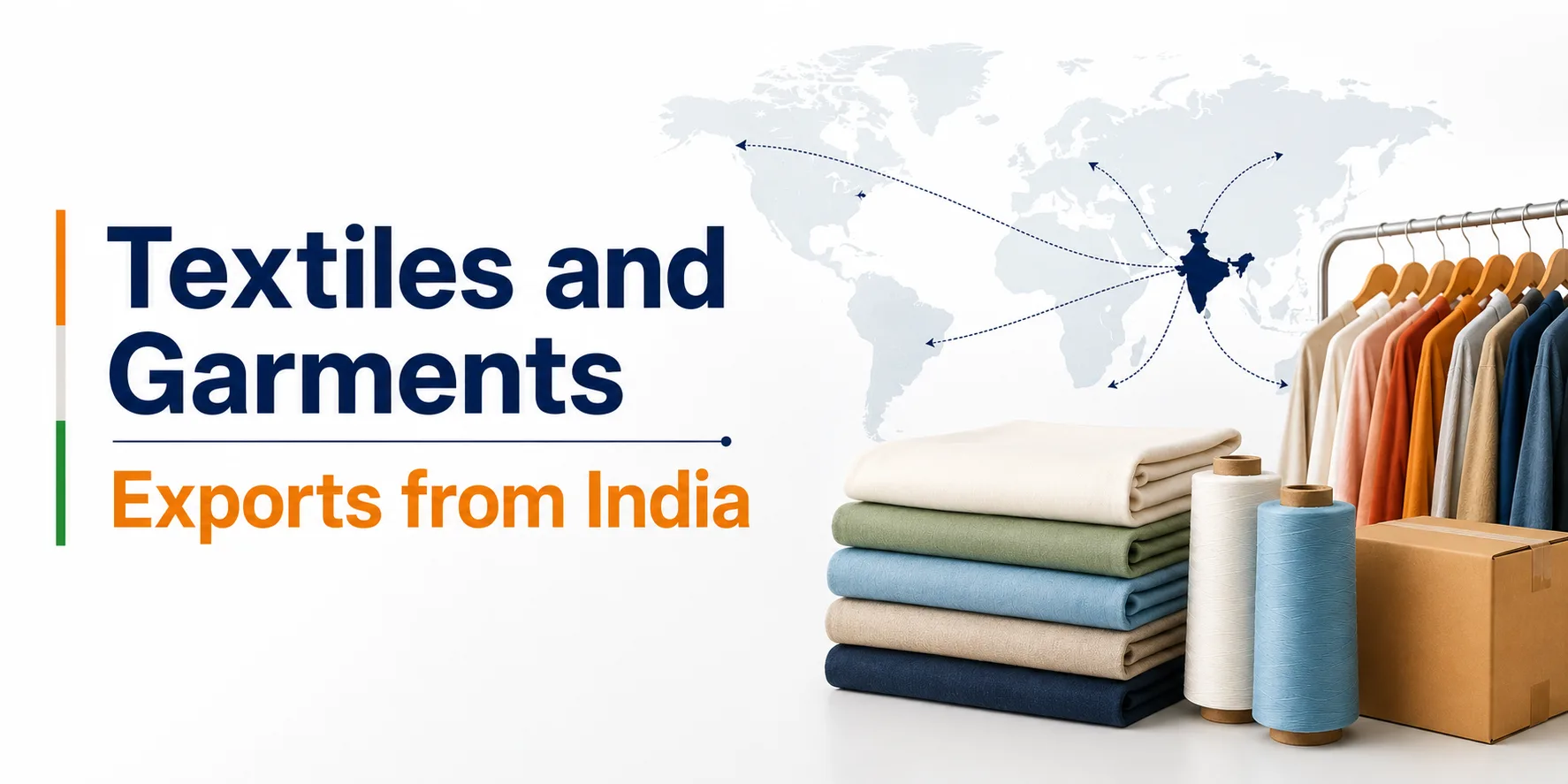
Maintaining an integrated domestic supply chain from fibre production to finished goods, textiles and garments exports from India make it the world’s third-largest exporter. To begin with, ready-made garments (RMG) drive the export basket. Moreover, it accounts for about 45% of total outbound shipments. Additionally, other major categories include cotton textiles and artificial fibres.
 
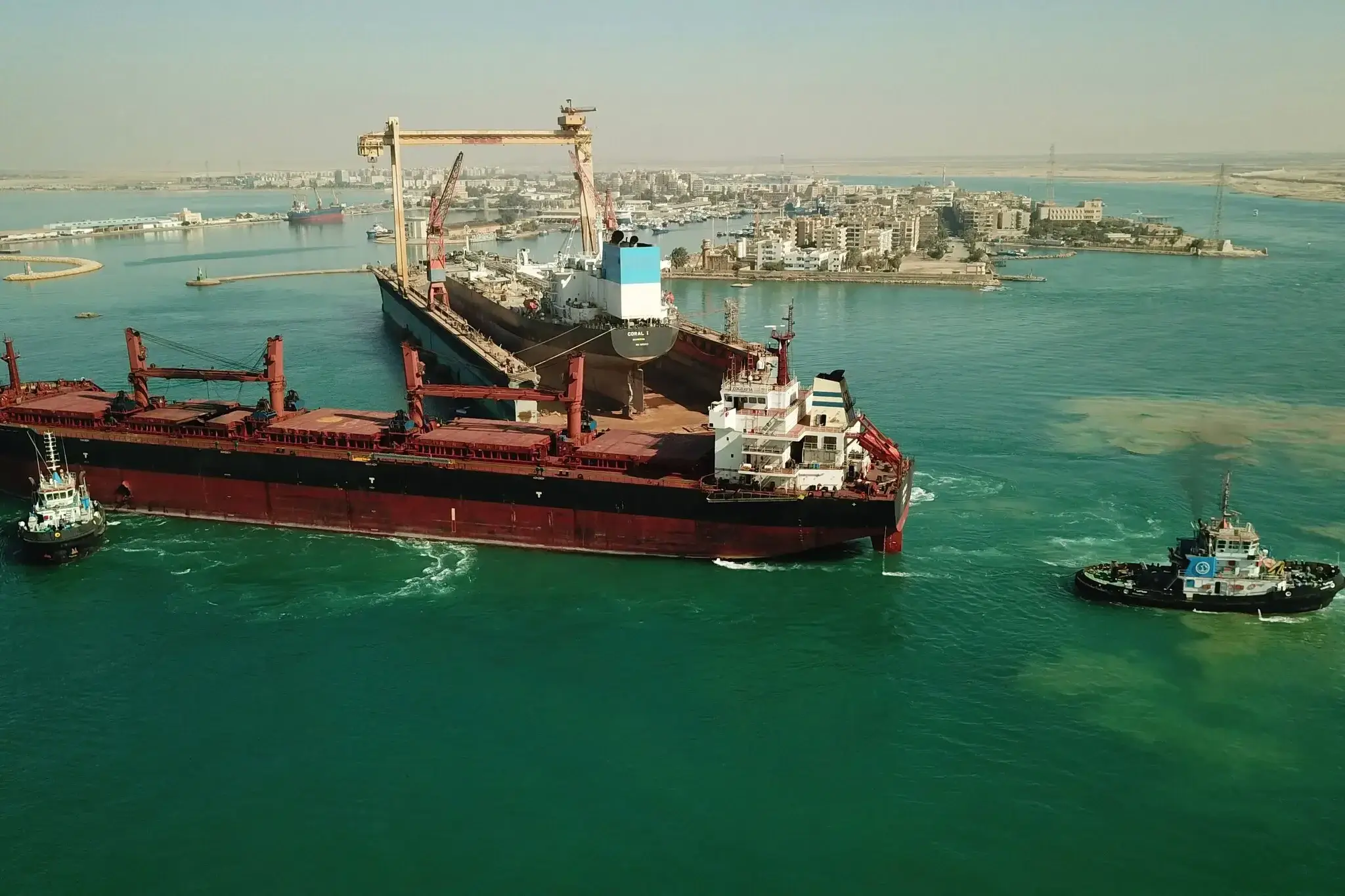
Furthermore, Mundra Port, Nhava Sheva Port, Kandla Port, Chennai Port, Visakhapatnam Port, and Cochin Port are some of India’s major export ports. First of all, the ready-made garments (RMG) are the largest contributor with US$14.53 billion. Second, cotton textiles account for 29% of the export basket. Third, artificial textiles account for a 15% of the export basket.
 
In other words, the United States is the largest market, which accounts for 25% of all T&A exports. Likewise, the other textiles and garments importers are Bangladesh, the United Arab Emirates, Germany, and the United Kingdom. Additionally, the country is the world’s largest producer of cotton and the second-largest producer of polyester and viscose globally.
 
Falcon Freight assists textile and garment exporters from India swith customs clearance, freight forwarding, and legal documentation. They also offer services through sea and air freight, managing the logistics required for global trade.
 
For more information:
Phone No. :- +91 9311595648.

Best Textiles Exporter from India

The international leader in denim, cotton shirting, and knitted fabrics serving major markets in the US, Europe, and Asia is the best textiles exporter from India.
Additionally, Welspun India is a reliable international supplier of home textiles, terry towels, and bedding to global retail giants like Walmart and Target.
 
On top of this, Vardhman Textiles is a major producer and exporter of large-scale cotton yarns and greige/processed fabrics.
Maintaining an integrated domestic supply chain from fibre production to finished goods, textiles and garments exports from India make it the world’s third-largest exporter. Furthermore, Mundra Port, Nhava Sheva Port, Kandla Port, Chennai Port, Visakhapatnam Port, and Cochin Port are some of India’s major export ports.

 

Best Textiles Exporter from India

 
Nhava Sheva is India’s largest and busiest container port. It is situated in Navi Mumbai. The Port is also officially known as the Jawaharlal Nehru Port (JNPT). On top of this, it handles about 60% of the country’s containerised cargo. Moreover, it is going to increase its container handling capacity for the convenience of the shippers. Most importantly, this will also pave the way for the installation of energy-efficient equipment.
 

American sea ports:

  1. Port of Los Angeles, California: This port handles over 9 million TEUs annually. Thereby, this makes it the busiest container port in North America and the main gateway for trade with Asia.
  2. Port of Long Beach, California: It is Adjacent to LA. It processes over 8 million TEUs annually. Additionally, it is a primary hub for trans-Pacific shipping and automotive cargo.
  3. Port of New York and New Jersey is the largest port complex on the East Coast. In conclusion, it handles more than 7 million TEUs. It serves as the primary entry point for European trade.

Export-Quality Garments from India

Top-tier exporters such as Shahi Exports and Gokaldas Exports are the ones that can get you Export-Quality Garments from India. Basically, Tirupur (Tamil Nadu) is the knitwear capital, specialising in cotton t-shirts, kids’ wear, and casual knit apparel. In other words, their FOB prices range from ₹120 to ₹250 per piece.
For easy and convenient exports, it is essential to have complete documentation and certifications.
Let us take a look at them.
 
Key Certifications & Standards
 
  • GOTS (Global Organic Textile Standard) ensures organic status from harvesting through environmentally responsible manufacturing.
  • OEKO-TEX Standard 100 certifies that finished cotton fabrics and garments are free from harmful chemical levels.
  • ISO 9001 is a quality standard for consistent management systems across major export houses.
  • IEC Code : An Importer-Exporter Code (IEC) is a mandatory 10-digit identification number for importing or exporting goods/services. The DGFT, Ministry of Commerce, India, issues this code.
  • Commercial invoice is a necessary legal document in international trade. A seller issues this for a buyer to confirm a sale and facilitate customs clearance.
  • A Packing List is a mandatory, detailed document to itemize the contents of a shipment. This includes weight, volume, and packaging type for each item, box, or pallet.
  • Certificate of Origin certifies that goods in a shipment are wholly obtained, produced, manufactured, or processed in a particular country.
  • Bill of Lading is a legal document in shipping that acts as a receipt for cargo, along with contract of carriage between the shipper and carrier, and a document of title.
  • An AD (Authorized Dealer) Code is a unique 14-digit number that enables exporters to clear goods through customs and receive foreign payments.

Conclusion

India’s textile and garments export sector demonstrates steady resilience, reaching ₹3,25,339 crore in FY 2025–26. Extended government tax schemes like RoSCTL and expanding global free trade agreements support them. The industry shows strong potential despite competitive gaps in synthetic fibres.  
Falcon Freight handles export custom clearance at all major Indian ports.
 
For more information:
Phone No. :- +91 9311595648.