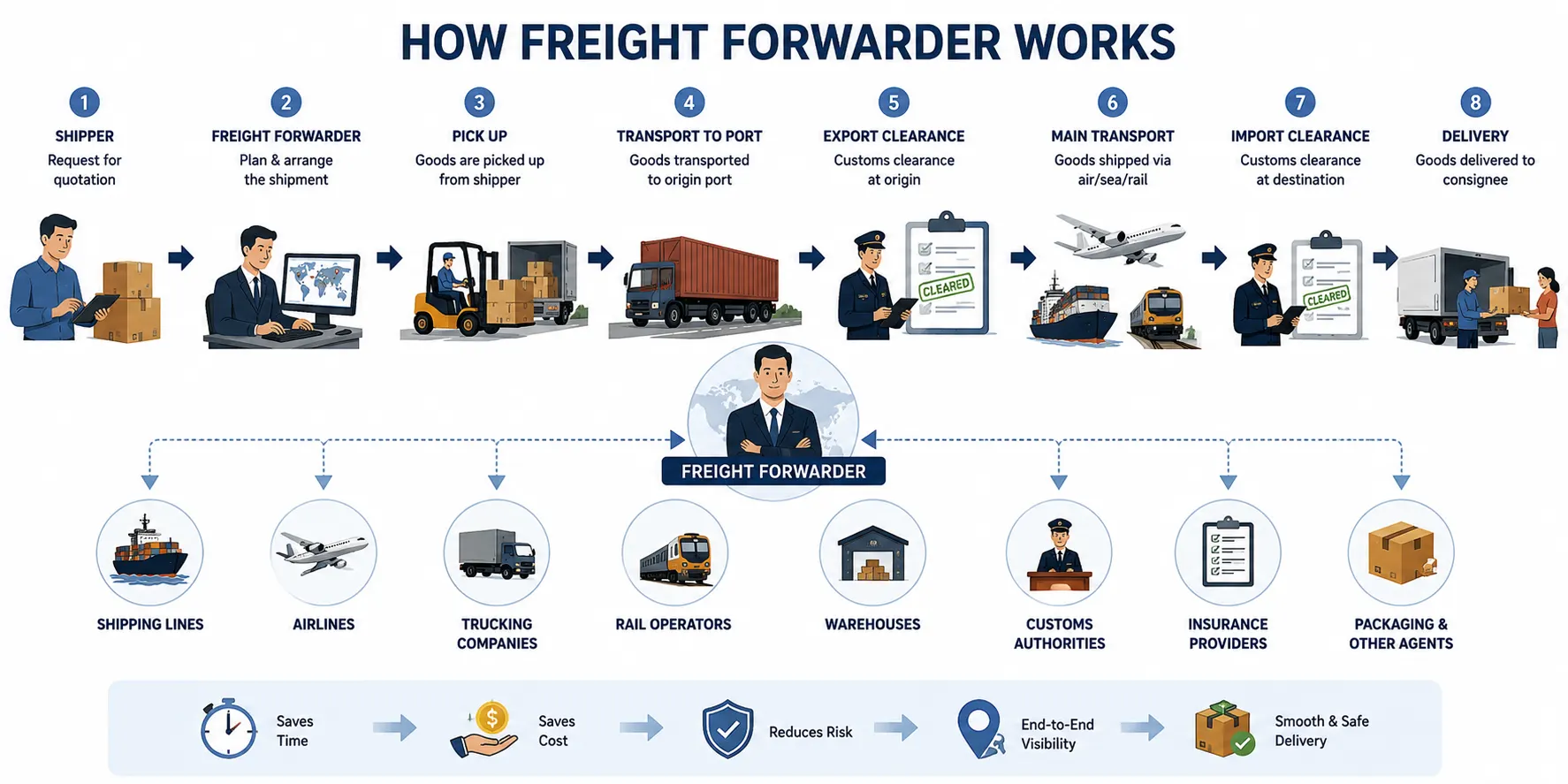
How does freight forwarding work? Freight forwarding works like logistics architects. They coordinate the transport of goods from origin to destination. Furthermore, they do not own the ships, planes, or trucks. Instead, they negotiate rates, manage crucial paperwork (like the Bill of Lading and commercial invoices), and navigate customs for domestic and international shipments. It is the organized coordination of moving goods from a supplier to the final destination.
Overall, it is a bridge between manufacturers, carriers, and customers. It comprises three main phases: origin operations, international transit, and destination handling.
In origin handling, the goods are transported from the shipper’s warehouse to the forwarder’s origin factory/facility/port via truck or rail. Moreover, the forwarder inspects the cargo, checks for damage, and would consolidate smaller loads of cargo in case of (Less-than-Container Load or LCL). Later, the forwarder then begins his export clearance work. In other words, he prepares and files essential documents (e.g., commercial invoice, packing list) to clear the goods for departure from the origin country/place.
In the international transit, the forwarder books space on an airfreight, ocean vessel, or overland truck. To sum it up, budget, transit time, and volume are the decisive factors. They transport the goods, and the forwarder pro-actively tracks the shipment’s progress. In addition, he then provides updates to the buyer and seller.
In the destination handling process, once the shipment arrives, the forwarder processes the essential customs documentation. Moreover, he pays for any applicable duties or taxes. Furthermore, he makes the payment to allow the cargo into the destination country. Finally, they unload, verify, and store the goods at a destination warehouse. After this, the shipment is delivered by truck or rail from the destination port to the buyer.
Falcon Freight simplifies your import and export operations by effective customs clearance.
Supply Chain & Global Logistics
Supply chain and global logistics drive the international trade. It is coordination of the entire network (sourcing, manufacturing, and distribution). On the other hand, logistics is the activity of handling the physical movement, storage, and final delivery of goods. Freight forwarding works like logistics architects. In other words, it is that part which plans, implements and controls the efficient flow and storage of goods, and services.
It is about getting the right product, to the right customer. There are many elements that play vital roles. In addition, they review the prices and volumes to make sure they fulfil what is required. They plan and strategize the entire journey—from origin to final destination. Above all, they perform the task by coordinating carriers, customs authorities, and warehousing providers. They choose the most efficient, cost-effective routes and modes of transit.
They secure better freight rates by combining smaller shipments from various clients. In fact, forwarders efficiently handle these documents to prevent costly fines or delays. They work directly with customs brokers. In addition, they navigate complex tariffs to ensure goods clear borders easily. They help businesses arrange cargo insurance and reroute shipments in unexpected weather or port delays.

Conclusion
A freight forwarder is the architect of transport. They do not move the goods themselves. However, they rather orchestrate the entire end-to-end journey. Additionally, they negotiate the best carrier rates, managing complex customs documentation, and coordinating logistics. In a nutshell, this way they ensure cargo arrives safely and on time. They inspect the items, and consolidate with other cargo to reduce costs. In conclusion, the consignment is transported from the destination warehouse to the final receiver.
Falcon Freight helps businesses move goods efficiently across international borders while navigating complex supply chain.
For more information:
Phone No. :- +91 9311595648.
Email :- cargodeal@falconfreight.com