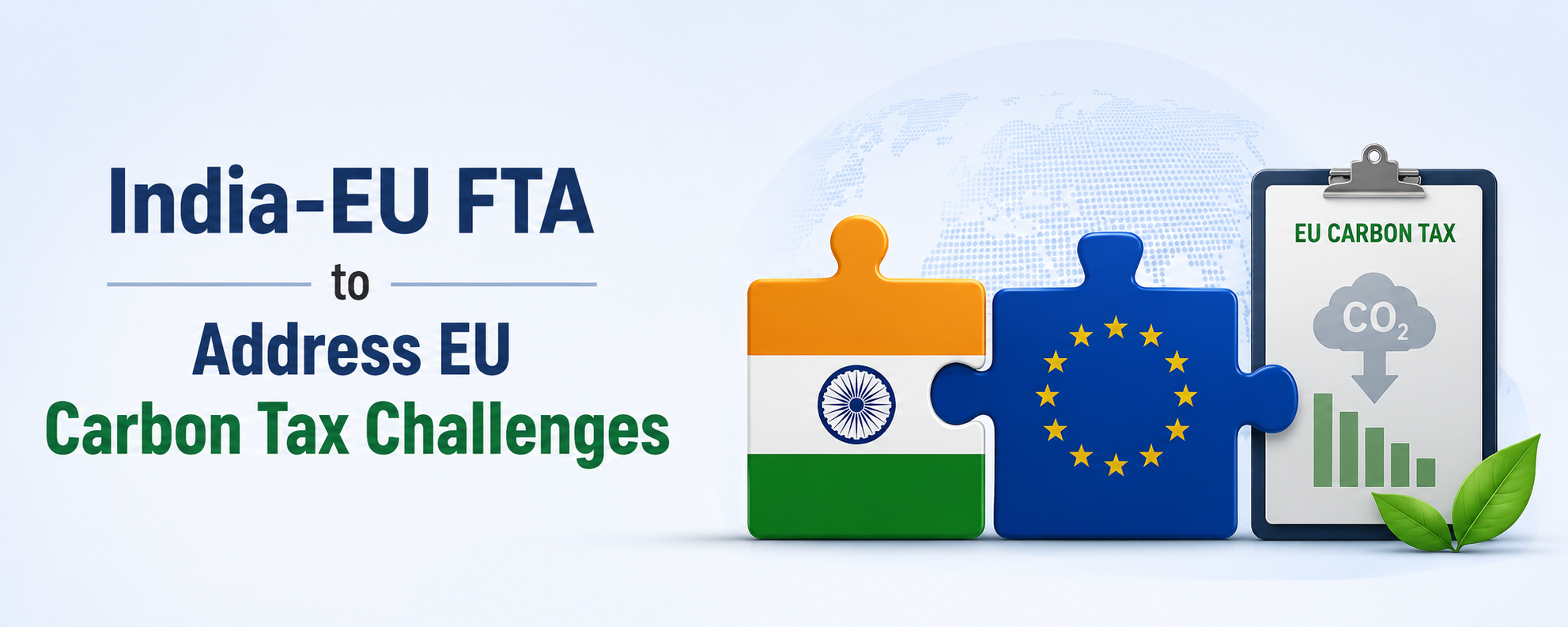
India-EU FTA to Address EU Carbon Tax Challenges
- Carbon Pricing has provisions to discuss and formally recognise India’s upcoming domestic carbon pricing framework.
- SME Support provides a dedicated work plan to ease reporting, verification, and embedded carbon calculation burdens for small and medium enterprises.
- Under CBAM, the EU will impose a carbon tax on goods such as steel, aluminium, fertiliser and cement.
- Moreover, it ensures that the EU authorities recognise the verifiers.
- This way, we engage with EU authorities on taking into account the carbon price they pay in India.
India - EU FTA Advantages for MSMEs
- Zero-duty market access on over 90% of tariff lines.
- Digital self-certification rules of origin.
- Faster customs clearance.
In essence, it becomes easier for small vendors to supply components and finished lifestyle, craft, or chemical items directly to European buyers.
Know More About International Trade → India – EU Sustainable Ship Recycling Regulations. Click on the link
Conclusion
The India–EU Free Trade Agreement establishes a historic framework and, at the same time, drives MSME growth through zero-duty market access, dedicated help desks, and reduced compliance barriers. Moreover, it simplifies access to European markets by reducing trade-related challenges and making it easier for small businesses to compete internationally. Most importantly, the agreement opens the door to a massive, high-income consumer base for Indian MSMEs, thereby creating new opportunities for exports, business expansion, and long-term growth.