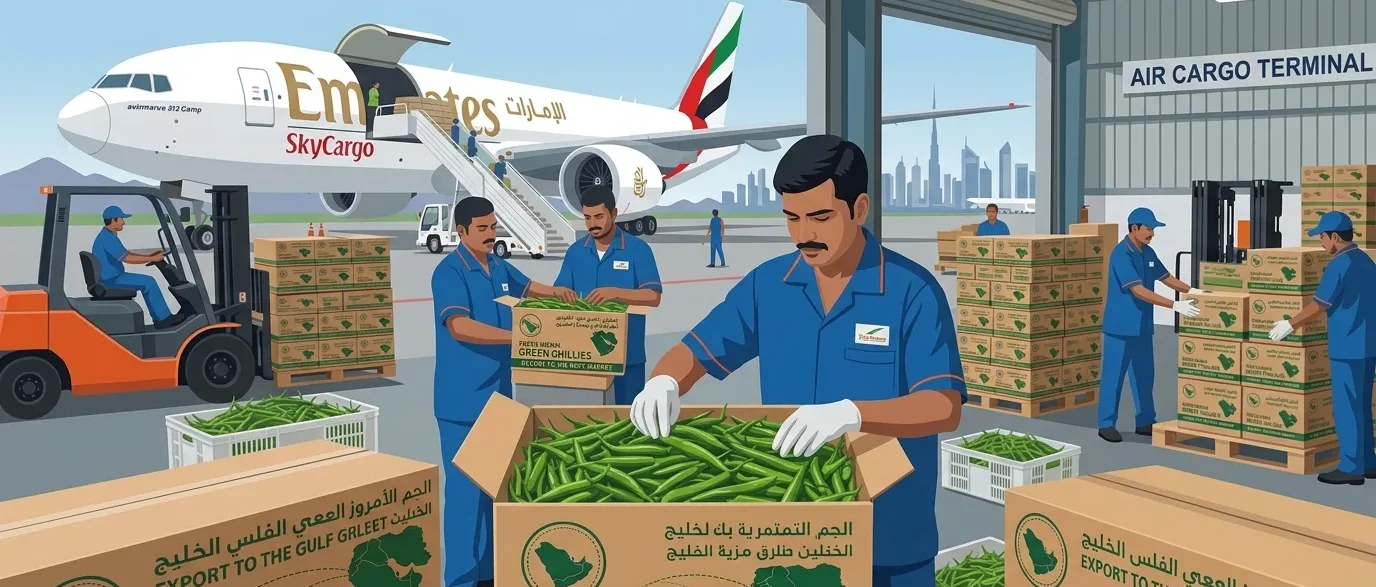
Air Cargo Container Transport
- Mundra port, Nhava Sheva port, Kandla port, Chennai Port, Vishakhapatnam Port and Cochin port are some of India’s major export ports. APEDA/Spices Board Registration is Necessary for handling agricultural products.
- First of all, register on the APEDA portal. Then fill the application form (ANF 2C). After this, pay the fees (approx. ₹5,000 + taxes). The last step is to submit the documents (IEC, GST, bank details). RCMC is typically issued within 10-15 days after the verification process. To avoid shipment disruptions and delays, register before you commence exports.
- Spices Board Registration (CRES):
- This registration is mandatory for exporters of spices from India. To proceed with the Process, apply on the Spices Board website for the Certificate of Registration as an Exporter of Spices (CRES).
- The Fees for registration vary based on the category they belong to (e.g., Manufacturer/Merchant Exporter: ₹5,000; Grower Exporter: ₹500).
- Import Export Code (IEC).
- PAN Number.
- GST Registration Certificate.
- Bank Certificate/Cancel Cheque.
- Certificate of Incorporation (if applicable).
- The drive is immensely there due to high demand for quality, and the pungent varieties of the chillies prevalent in India. India sends shipments via air and sea from crucial hubs in Maharashtra, Andhra Pradesh, and Gujarat. These ports help achieve higher gains and profitability. Keeping in mind the key markets & demand The UAE is the largest importer, with high demand for spicy, fresh green chillies in Saudi Arabia, Qatar, and Oman.
Coming to the Logistics, fast transit times from India’s western ports (Mundra, Nhava Sheva) permit fresh deliveries. They use refrigerated containers (reefers) to maintain the quality and freshness of the green chillies.
- The Exporters must comply with strict Quality Standards like the GCC Maximum Residue Limits (MRLs) for pesticides and should obtain a phytosanitary certificate for every shipment.

The various types of air freight containers are
In the Southeast Asia region, Malaysia, Singapore, Bangladesh, and Sri Lanka are emerging markets for Southeast Asian cuisine. USA and Canada too show strong demand for fresh Indian green chillies.
To know more about this click on the above link ⬆
Conclusion
Exporting green chillies is a lucrative and high-growth sector. India holds a strong position as one of the world’s leading producers and exporters. Stringent compliance with global quality standards is necessary for entering high-value markets. The exporters should concentrate on sustainable agricultural practices. Practices like organic farming help meet rising global health and safety standards.
FaQ's
To export green chillies from India, you need key documents such as an Importer-Exporter Code (IEC), APEDA registration, Spices Board (CRES) certificate, Phytosanitary Certificate, commercial invoice, packing list, and shipping bill. These ensure compliance with international trade and food safety standards.
The major importers of Indian green chillies include Gulf countries like UAE, Saudi Arabia, Qatar, and Oman. Additionally, markets such as the United Kingdom, USA, Canada, Germany, and Southeast Asian countries also show strong demand.
Green chillies must be transported in refrigerated containers (reefers) maintained at 8°C to 10°C. Proper grading, washing, and moisture-resistant packaging are essential to preserve freshness and meet international quality standards.
Yes, APEDA registration is mandatory for exporting green chillies as they fall under scheduled agricultural products. It helps exporters access government benefits, ensures compliance, and facilitates smooth international trade operations.