
- Raw sugar, white sugar, and refined sugar (ITC HS codes 1701 14 90 and 1701 99 90) are the categories completely banned for exports. However, there are exemptions as well. Quota-based exports to the United States and the European Union remain unaffected because of the bilateral agreements signed earlier. The arrangements allow exporters to ship specified quantities of Sugar to these destinations. Moreover, they can export at significantly reduced or zero customs duties under the CXL and Tariff Rate Quota (TRQ) arrangement respectively. The industry supports millions of farmers, labourers, and transport workers.
Why India banned sugar exports?
While answering the question, “Why India banned sugar exports?”, there are a number of reasons behind this decision. In addition, one is to secure its domestic food supply, and the other is to stabilize local retail prices. Another significant answer is to reduce risks of potential production shortages. Thereafter, there may be high-demand festive seasons which is a significant reason. There are concerns over El Niño and lower sugarcane yields in crucial producing states (like Maharashtra and Karnataka. Additionally, this forced authorities to prioritize local availability.
India Sugar Export Ban has taken effect with a complete prohibition until September 30, 2026. The government aimed to food inflation caused by weather anomalies, supply chain disruptions, and global geopolitical issues. Climate models suggest a weak-to-moderate El Niño can emerge by mid-2026 and could continue into 2027.
Overall, India uses a large portion of its sugarcane crop to produce ethanol for biofuel blending. Keeping sugar at home prevents disruptions to the ethanol supply chain. Otherwise, we would have to force the country to import costlier crude fuels. Shipping delays from Brazil caused a spike in overseas demand for Indian sugar.
- In addition, this move aims to ensure sufficient sugar for local consumption and build buffer stocks for the next year. According to industry observers, the government imposed the ban because sugar prices had already started increasing. The government has also allowed exports in cases linked to food security requests made through foreign governments.
Falcon Freight streamlines complex documentation to keep your supply chain running smoothly. They assist with logistics for fulfilling national food security pacts.
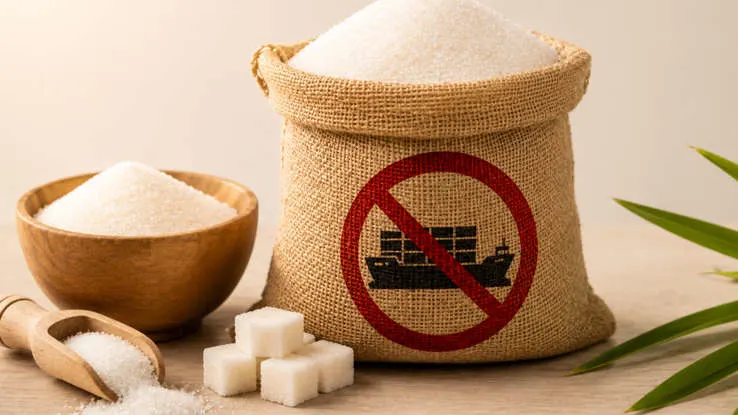
Global impact of Indian sugar exports
- The export ban is therefore expected to :
- Disrupt trade flows
- Affect importing nations’ dependent on Indian sugar
- Increase global dependence on Brazilian sugar export.
- Authorised courier may request the jurisdictional DC/AC for RTO of imported goods lying in the ICTs uncleared for more than 15 days. The jurisdictional DC/AC grants permission of re- export.