India’s First Deep-Water Transshipment Port
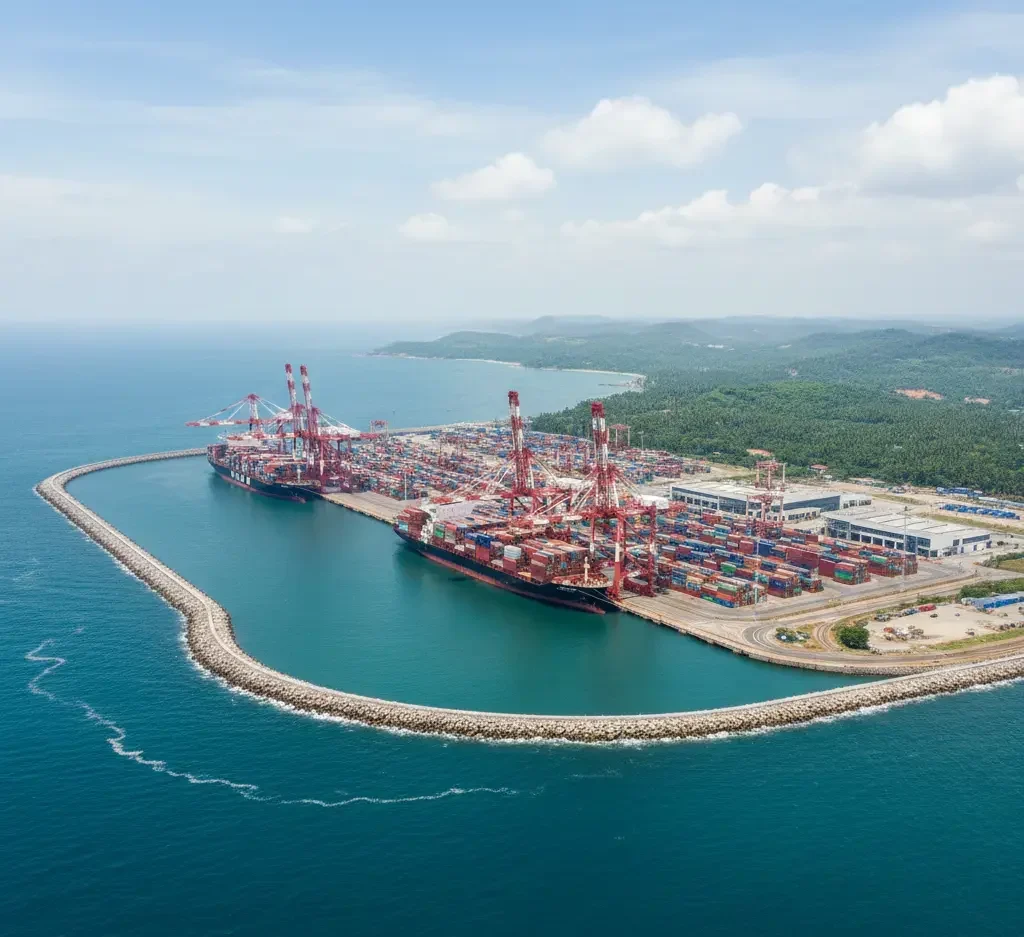
India has taken a transformational leap in its maritime history with the inauguration of its first deep‑water transshipment port — the Vizhinjam International Seaport in Kerala. This monumental project marks the beginning of a new era in Indian logistics, trade connectivity, and global competitiveness.
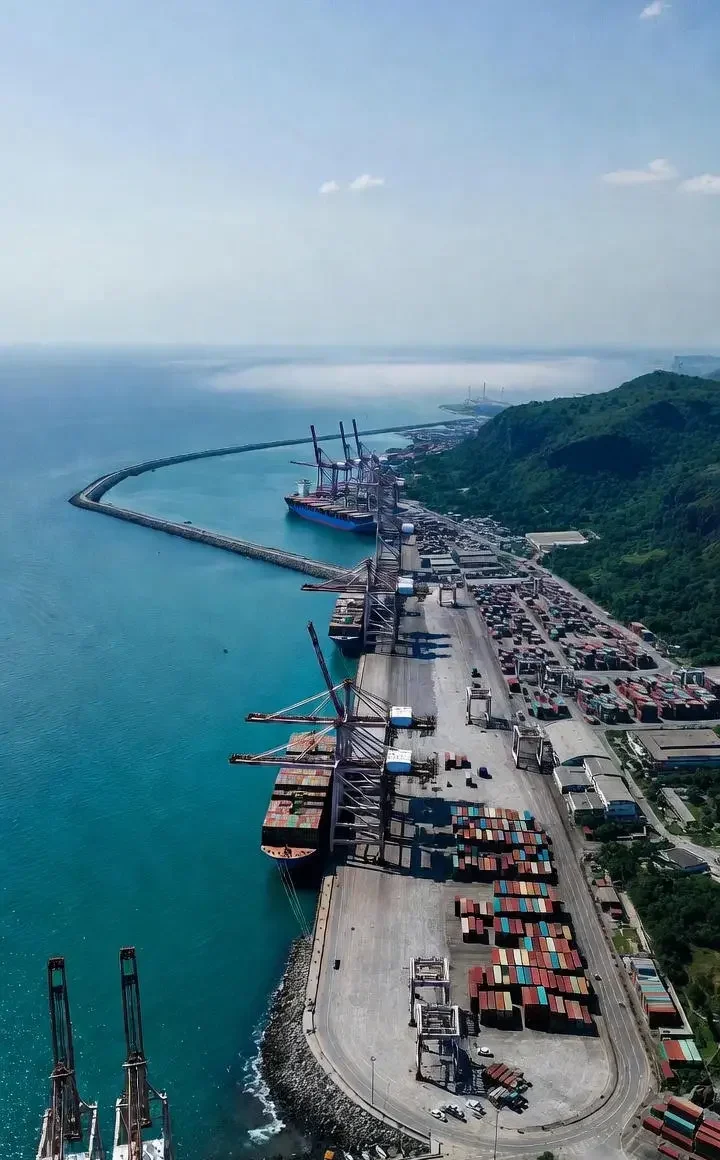
The Vizhinjam port, located in the periphery of the capital city of Thiruvananthapuram, has brought a strategic advantage hitherto rarely seen before in the Indian maritime sector. The port represents a modern facility with naturally deep water, proximity to major shipping routes, and first-class infrastructure-all the ingredients that will finally redefine trade patterns not only for India, but even the entire South Asian region.
In practical terms, this means quicker movement of goods, lower costs, and stronger connections between Indian exporters and buyers across the world.
What Is a Transshipment Port — And Why It Matters?
In order to understand the significance of Vizhinjam, it is essential to understand what a transshipment terminal is. A transshipment port is an intermediate point whereby containers are transferred from one ship to another, although in most cases, the freight is moved from a mega-ship to a smaller feeder ship or vice versa before reaching its final destination. Rather than unloading the freight directly into smaller regional ports, the freight is transported as cargo either from mega-ships to local distribution freight or vice versa.
Prior to the inception of the Vizhinjam transshipment facility, India had no dedicated transshipment facility for deep-water vessels of such a magnitude. Consequently, a significant 75% of the transshipment volume of the country had to pass through foreign transshipment options like Colombo in Sri Lanka, Singapore, and Jebel Ali in the UAE.
With the completion of the Vizhinjam project, India will be able to continue sustaining this flow and reduce the delay associated with the maritime pathway.
Why Vizhinjam Port Matters for India's Maritime Trade
1. Natural Deep Water and Ultra‑Large Ship Handling
One of the biggest strengths of Vizhinjam is its natural draft depth of over 20 meters, meaning extensive dredging is not required to accommodate Ultra‑Large Container Vessels.Cargo ships, more than 24,000 TEUs, which are the largest today, can berth directly in Vizhinjam-a unique advantage that very few ports in the world can boast of.
These capabilities make the port not only a regional asset but also a global player on major trade corridors like the Suez–Far East and Middle East–Europe routes.
2. Exceptional Connectivity to Global Trade Routes
Vizhinjam is only 10 nautical miles away from the busiest international east-west shipping routes. Its proximity very substantially reduces voyage deviations that ships normally make to reach less optimally located ports.
Think of it like a highway exit that is right on the main road; fewer detours, cheaper transit expenses. It means the same for Indian exporting businesses: faster reach to markets in Europe, Africa, and the Americas.
3. Advanced Automation Systems
Vizhinjam goes deep, and it goes smart too.
The port has semi-automatic and automatic systems, which include:
- Ship-to-shore cranes operated
- Automated yard handling
- Advanced Vessel Traffic Management Systems
This automation optimizes efficiency, reduces downtimes, and ensures that turnaround times are faster – an important aspect, especially when it comes to logistics within global business transactions. This automation also serves as a cost-effective technique for carriers and shipment owners.
4. Costs Cut Down & Competitiveness Improved
Prior to Vizhinjam, India’s exported goods would normally incur an additional $80-$100 handling charge per container because India was forced to use transshipment hubs outside its own territory. The creation of its own transshipment hub would decrease these costs and retain foreign exchange earnings. This is a game-changer for Indian exporters, be it cloth, electronics, auto parts, or farm products, because it allows them to remain competitive in the global market.

The fact that India is a major economy, already ranked fifth globally by GDP, has not always equated to its presence in major world shipping hubs. Lack of a large transshipment port was one of these gaps.
Now, with the intervention of Vizhinjam, the country is able
- Maintain the revenue accruable via trade that hitherto exited at foreign ports
- Enhance export competitiveness through faster transits
- Decrease freight transport for manufactured and exported commodities
- Attract global shipping companies seeking efficient regional bases
(Forbes,2013) Furthermore, with larger vessels being allowed to dock directly at the Indian soil, it portrays a sense of confidence and advancement, indicating that the country is prepared for the projections of the future when it comes to trade.
Falcon — Your Partner in the New Era of Shipping
As India embraces this maritime milestone, it’s more important than ever for exporters and importers to partner with reliable logistics experts that understand both local and global shipping dynamics.
At Falcon, we specialize in navigating India’s evolving freight landscape — from container consolidation and customs clearance to full‑fledged export documentation and transshipment coordination.
With the advent of Vizhinjam Port, Falcon stands ready to help businesses:
- Leverage faster transit routes
- Optimize freight costs
- Integrate seamlessly with global shipping networks
- Ensure smooth export and import procedures
We understand that the world of international logistics is changing — and we are here to make your export journey smooth, efficient, and cost-effective.
The Road Ahead: What’s Next for Vizhinjam
The port is not just a present achievement — it’s a long-term vision. While the first phase of commercial operations is already underway (handling hundreds of vessels and cargo volumes in excess of operational forecasts), future expansions aim to boost annual capacity to millions of TEUs by 2028.
There are also plans to enhance inland connectivity — including rail links — to ensure that goods flow not just by sea, but swiftly onward by land to markets throughout India and beyond.
In Conclusion
The opening of the Vizhinjam International Seaport, which is the first deep-water transshipment facility of its kind in the whole of India, represents a historic occasion and is an indication of India’s capabilities. This is not only a great success for the Indian shipping company but also establishes it as one of the prominent stakeholders in the global shipping business, thereby making it less dependent on foreign transshipment points, which is quite lucrative for Indian businessmen as well as the shipping fraternity across the globe.
In this highly competitive environment of logistics, the key to success for businesses is quick adaptability and collaboration with renowned experts such as Falcon. Having detailed experience in export and import procedures, customs handling, and transshipment processes, Falcon takes care of the smooth transit of your consignment from India to the international markets.
As a small exporter or a large company, you will find custom-made solutions at Falcon to minimize shipping costs, simplify documentation procedures, and unlock the full benefits of the first ever transshipment deep-water port in India.
For professional consultancy and logistics assistance, contact Falcon Freight today:
Phone: +91‑9311595648
Email: [email protected]