
India delivers the best quality fruits and vegetables export from India. After China it is famously known as the fruit basket of the world. India is endowed with a incredibly heterogeneous area. India is also characterized by a incredible diversity of agro-climatic zones. It allows for the cultivation of a variety of horticultural crops such as fruits, vegetables, flowers, spices, plantation crops, root and tuber crops, and medicinal and aromatic crops.
The major fruits grown in India are Mango, Citrus and Banana. The other fruits are Apple, Guava, Pomegranate, Grapes, Jackfruit, Pineapple, Papaya, Sapota, Custard apple, Indian gooseberry (Aonla) and others. Among fruits, the country ranks first in the cultivation of banana followed by mango and citrus fruits.
Sampling method for determination of MRLs for exports of vegetables: The authorities shall carry out vegetable sampling as per the importing country’s regulations either from APEDA-recognised pack-houses/establishments or from farms.
A new entrepreneur can work on his export documentation for fruits and vegetables with ease. He can begin his trade as an individual (proprietary concern) or partnership firm or a joint stock company or even forming cooperative society or producers’ company. Partnership firms must execute a partnership deed as per Indian Partnership Act 1932 on a Non Judicial Stamp Paper as per the Stamp Act of the State Government and register the partnership firm with the Ministry of Corporate Affairs.

Curious about the Top 10 Vegetables exported from India? Check out our video to learn more.
Export Vegetable
1 Videos

Name of the Firm: Find an attractive name for your Export Firm. It should have only two to three words. The first word should be unique, inspiring and meaningful. The last word should be preferably Exports or International or Overseas. It indicates that you are operating in an international market. Exim or Impex or such other hybrid words should be avoided. For example, Orbit International, Skyline Overseas, ABC Exports.
If you are dealing with a particular commodity like agro, spices, chemicals, engineering etc., you may include it in the middle of the name. For example, Sun Agri Exports, Maruti Fresh Fruits International.
PAN Card: Once you have decided the name of your firm, now go for obtaining PAN Card as it is a must for getting your IEC number. Apply to the concerned Income Tax office for PAN number. In case of a proprietorship firm, the PAN of the person’s name is valid. In other cases, the PAN of the company’s name is required.
Company Logo: Create / Design an attractive logo of your firm to showcase your dream/ vision
Registration For Exporters
Local Registration: If one wants to export fresh fruits and vegetables from India to Dubai, get a Shop Act Licence from local municipal authority or register with a concerned government authority. If you engage in manufacturing, register with the District Industry Centre to obtain an SSI number or get a Udyog Aadhaar number. Moreover, obtain membership in the local Chamber of Commerce, as it helps you open a bank account and obtain the Certificate of Origin and RCMC.
Bank Account: Open current account of your firm in any Public Sector Bank or any reputed Private Sector Bank like ICICI Bank, HDFC Bank, UTI Bank etc. It is advisable to open current account with an RBI authorized dealer (AD) bank dealing in Foreign Exchange directly and not with any cooperative bank as they do not deal in foreign currency.
GST registration is mandatory for each imported goods while exporting goods from one country to another. Goods purchased for exports are exempted from other taxes.
Obtaining IEC Number (Importer-Exporter Code): An IEC is a 10 digit number which is mandatory for taking up export/ import Business. They have now made the facility for IEC in electronic form, or e-IEC, operational. The IEC covers all branches, divisions, units, and factories of the applicant. Only one IEC can be issued against a single PAN. Online Procedure for getting online IEC Number Ø Visit DGFT website (http://dgft.gov.in). Ø Go to “Online IEC Application”.
Obtaining RCMC of Concerned Export Promotion Councils (EPCs): After obtaining the IEC Number, you should contact and get in touch with Falcon Freight, as they can help you obtain the Registration-cum-Membership Certificate (RCMC) from the Export Promotion Council (EPC) related to the products you are exporting, for example, APEDA for specific agro products including fruits and vegetables, and the Spice Board for spices. RCMC authorizes you to import/export or claim any other benefit under FTP and avail services or guidance. Export Promotion Councils (EPCs) are organizations of exporters, set up with the objective to promote and develop Indian exports. Every Council is responsible for promotion of a particular group of products/ projects/services.
Selection of products for export and finding their ITC (HS) Codes: India exports more than 10,000 products including agricultural and export quality perishables. Then collect export/import data of your products from various websites of government institutions, EPCs and private information providers. In India, authorities use the 8 digit ITC (HS) Code for this purpose. People better know ITC (HS) codes as Indian Trade Classification (ITC). The Harmonized System (HS) of tariff nomenclature provides an internationally standardized system of names and numbers to classify traded products.
To know more about apeda registration for exporters, please visit 👉https://falconfreight.com/understanding-the-rcmc-registration-certificate-process/
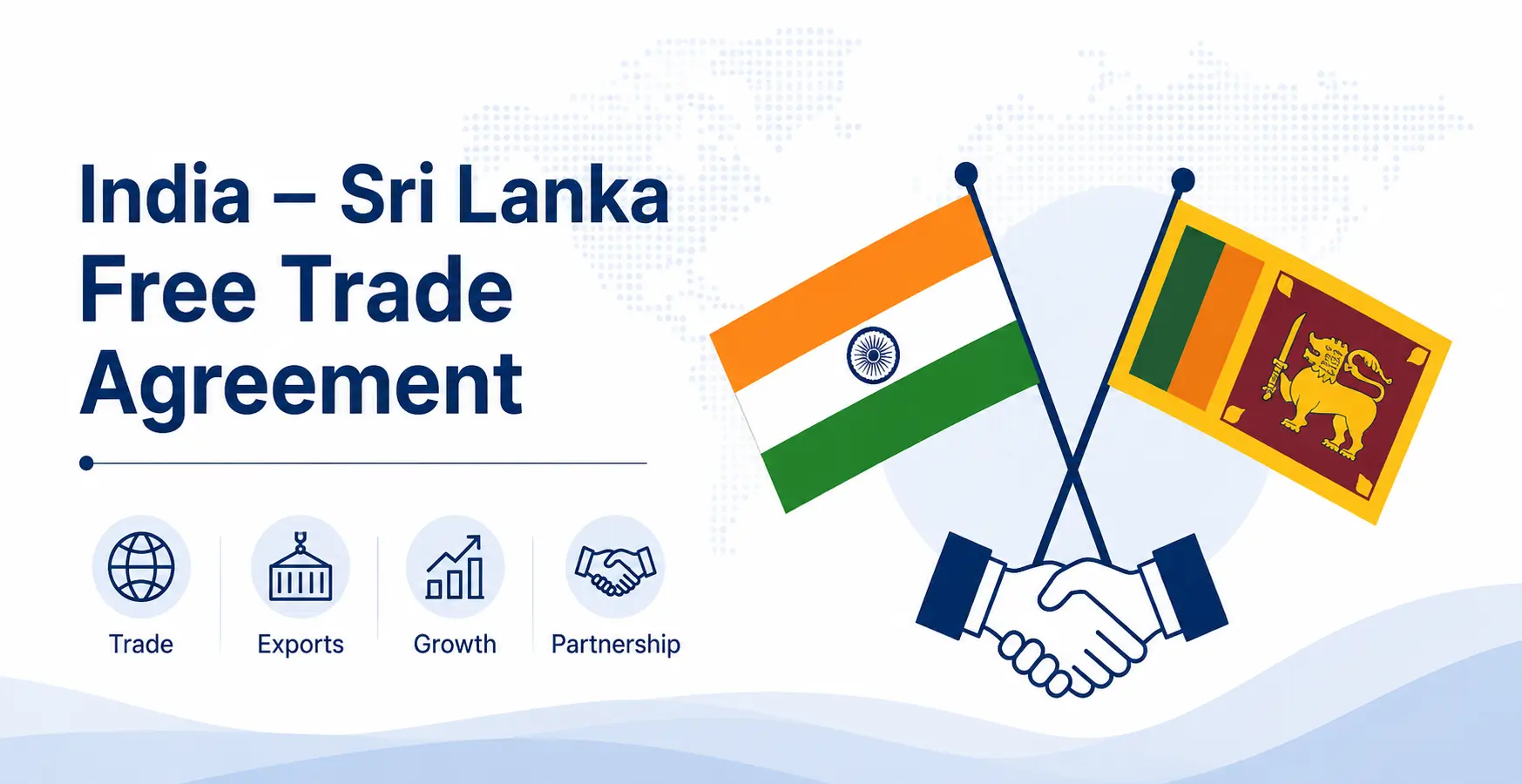
Freement Trade Agreement (FTA) and Preferential Trade Agreement (PTA, ) is an agreement between two or more countries in which partner countries exchange trade concessions for goods and services like fruits and vegetables. It has eased exports from India, and made it easier. Now there is economical access to imported raw materials, fuels, intermediate and capital goods for domestic industry. Issues discussed under these cover customs duty elimination, removal of quantitative restrictions, easing of customs procedures, and improved market access . Other issues include standards, rules of origin, dispute settlement, TBTs, IPR, Government procurement rules.
Export pricing is the most significant factor for promoting exports. We all face global trade competition. It is mandatory for the exporter to keep the prices down. He has to keep in mind all export benefits and expenses too. At the same time, there is no fixed formula in export pricing. Most likely there can be varying prices for the same product depending on various factors viz., marketing strategy, product uniqueness, quality, brand recognition, quantity, market demand and target clients and customers.
The price may vary with exporter to exporter. It depends upon whether the exporter is a merchant exporter or a manufacturer exporter or exporting via a canalising agency. The way you price a product plays a vital role in grabbing the buyer’s attention before the buyer becomes familiar with the product’s quality, delivery, and service. In a competitive environment, lower price helps in maximizing sales.
Commercial documents are classified as Principal Export Documents and Auxiliary Documents:
Principal Export Documents: The exporter sends these eight required documents to the importer. These are known as Principal Export Documents. They are:
- Commercial invoice
- Packing list
- Certification of inspection/quality control (where required)
- Bill of lading/Combined Transportation Documentation
- Shipping Advice
- Certificate of origin
- Insurance Certificate/Policy (In case of CIF export sales contract)
- Bill of Exchange.
Auxiliary Export Documents: The remaining eight documents, other than principal export documents, are known as auxiliary export documents. They are:
- Proforma invoice
- Intimation for Inspection
- Shipping Instructions
- Insurance Declaration
- Shipping Orders
- Mate’s Receipt
- Application for Certificate of Origin and
- Letter to the Bank for Collection/Negotiation of Documents.
Export Documentation, Proforma Invoice:
Proforma invoice: It is the start of an export contract. When the exporter receives the trade inquiry from the importer, the exporter submits the Proforma invoice to the importer. It has details such as name and address of the exporter, name and address of the intending importer, nature of goods, mode of transportation, unit price in terms of internationally accepted quotation, name of the country of origin of goods, name of the country of final destination, period required for executing contract after receipt of confirmed order and finally the signature of the exporter.
Commercial Invoice: A commercial invoice is the seller’s bill for merchandise goods sold by him. It contains all the particulars and details in respect of name and address of seller (exporter), name and address of buyer (importer), date, exporter’s reference number, importer’s reference number. You can find identification marks of the package, total number of packages, name and number of the vessel or flight. It also contains bill of lading number, place and country of destination, country of origin of goods, reference to letter of credit, if opened, terms of payment, and finally signature of the exporter.
Consular Invoice: Some importing countries insist that the importing country’s consular located in the exporter’s country sign the invoice. Such invoices are known as consular invoice. The exporter has to pay a certain fee to obtain the certificate/invoice. Such charges/ fees vary from country to country. The main purpose to obtain consular invoice is to secure authentication of information contained in the invoice.
INCOTERMS 2020:
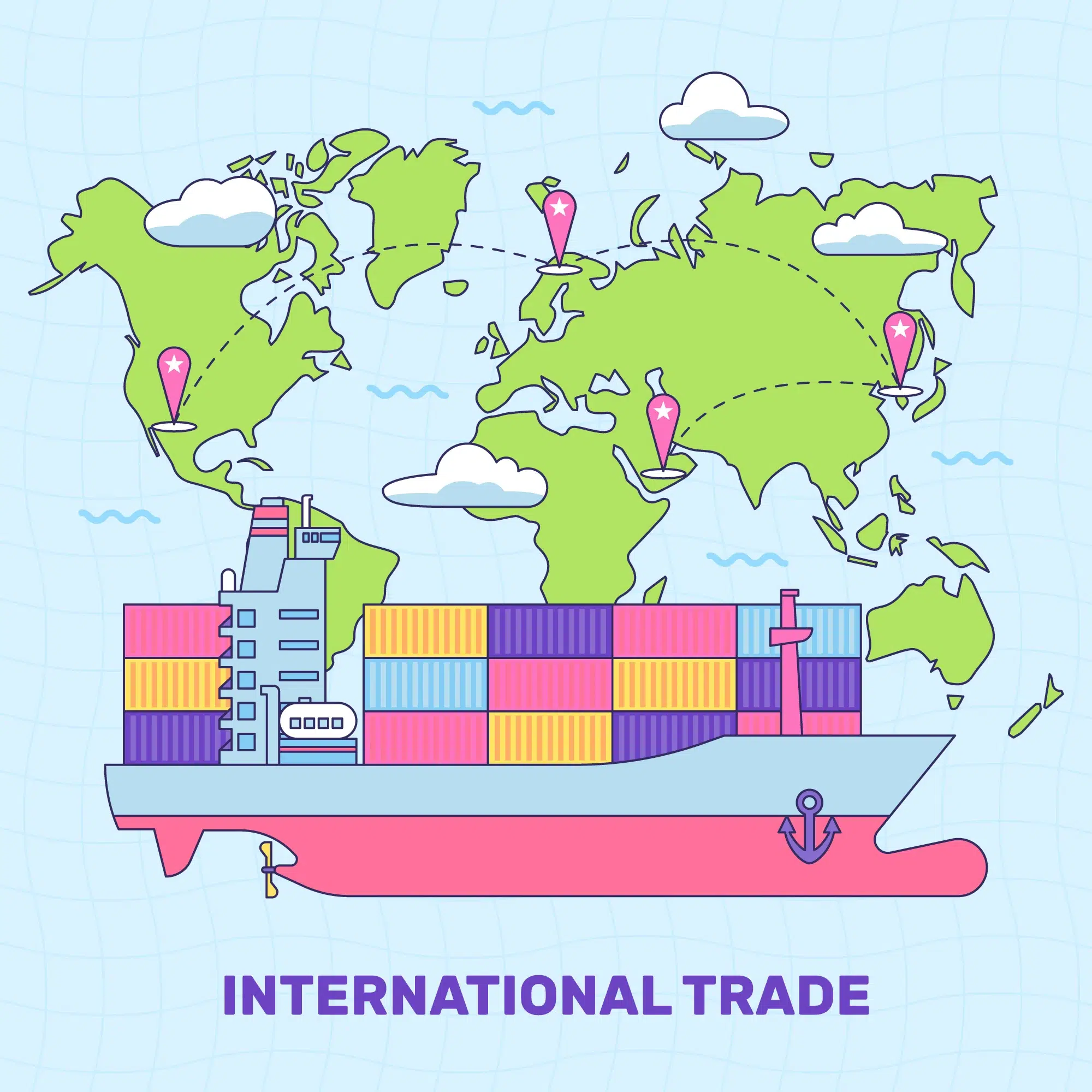
To avoid clashes, importers and exporters – must have a common understanding of the terms and conditions under which they trade. International Commercial Terms, known as “INCOTERMS”, clearly define the responsibilities of exporters and importers in arranging shipments and transferring liability at various stages of the transactions.
EXW, FOB, CIF and CIP are the most frequently used in export import words. Group E – Departure Under EXW you – the Seller – minimise the risks by only making the goods available at your own premises.
- EXW – Ex Works (… named place) EXW represents minimum involvement of the seller and the maximum involvement of the buyer in the arrangement of the transportation of the goods from seller’s premises (factory, warehouse etc.). When When you use EXW, you should remember that it does not guarantee the export of the goods, and the buyer may keep the goods in the seller’s country and/or re-sell them to a third party.
- FOB – Free On Board (…named port of shipment) FOB is one of the most common terms used in global and international trade. Under FOB the seller is responsible for delivering goods to the named port, export customs clearance and loading them onto the vessel. While loading onto the ship, the goods might fall on the wharf or into the water, the seller is responsible for losses, but if the goods fall on the deck of the ship, the losses are the buyer’s responsibility.
- CIF – Cost, Insurance and Freight (… named port of destination) CIF is very similar to CFR with the addition of insurance for seller’s responsibilities.
Conclusion
Exporting fruits and vegetables from India via Falcon Freight involves specialized, temperature-controlled, end-to-end logistics processes designed to maintain product freshness from every farm to final destination. Falcon Freight acts as a specialized service provider for handling perishables, offering services like container transport, customs clearance, and, where necessary, air freight for urgent shipments.
Exporting your precious products can help your business grow and expand into new horizons and markets. However, knowing India’s export procedure and documentation is important to avoid expensive mistakes. I hope your interaction with Falcon must have enriched you with an unforgettable experience and provided a useful overview of what you need to know about exports and its pre-requisites. If you have any further queries, please get in touch with us; we will be happy to assist you further.
If you would like to know more about export procedures and documentation in India. So, please contact us. We can be reached at +91-9311595648 or at cargodeal@falconfreight.com