Enquire Now
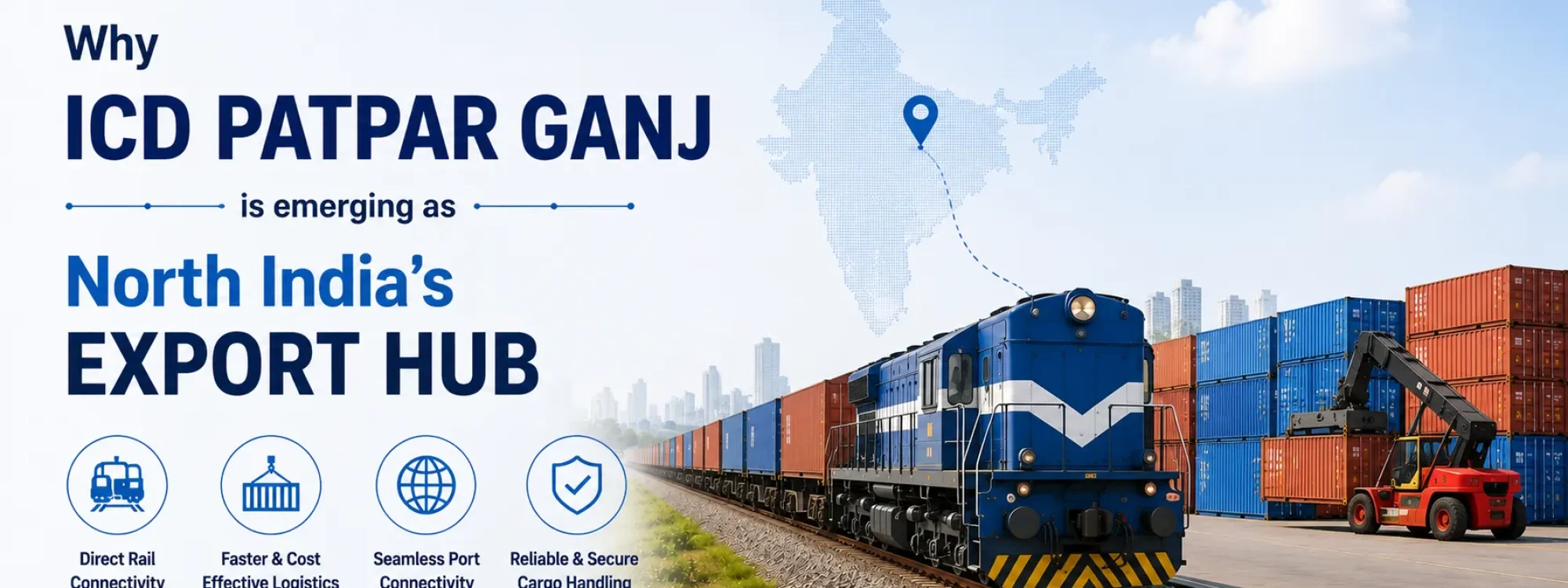
Why ICD Patpar Ganj is emerging as North India’s export hub

Why ICD Patpar Ganj is emerging as North India’s export hub

Being equipped with a versatile infrastructure and having the capability of handling various types of containerised cargo are obvious reasons why ICD, Patparganj, is emerging as North India’s export hub. In addition, it caters to a wide range of industries. The list includes electronics, textiles, automotive components, industrial machinery and consumer goods.
 
Another major reason is that the strategic location in East Delhi makes it an ideal choice for industrialists and traders. Furthermore, an Inland Container Depot is also known as a Dry port. Likewise, it is a multi-modal logistics centre with public authority status under customs. In other words, such a dry port connects to a seaport either by rail or road. After this, it serves as a trans – shipment point for export and import cargo.
 
Due to its strategic location in Delhi NCR, it brings customs clearance closer to the manufacturing hubs. Thus, it reduces the overall transit times too. It is a great support for smaller shipments too. Above all, it specialises in LCL export consolidation. This allows small manufacturers in Delhi- NCR to ship goods at economical rates. On top of this, they do not have to wait for the full container to fill. Recently, the Central Warehousing Corporation (CWC) initiatives have offered competitive tariffs too.
Some of the initiatives taken include:
 
✔ More competitive ground rent tariffs
✔ Fixed train connectivity
✔ Infrastructure upgrades
 
Additionally, these initiatives could provide exporters with another viable gateway when supply chains face operational challenges. Most importantly, Mundra port, Nhava Sheva port, Kandla port, Chennai Port, Vishakhapatnam Port and Cochin port are some of India ‘s major export ports.

Best Inland Container Depot in North Delhi

As far as the operations and connectivity are concerned, the best inland container depot in North Delhi is the ICD, Patparganj. Most importantly, it lies in the Ghazipur Village on Road No. 56. Above all, the Central Warehousing Corporation (CWC) manages the ICD, Patpar Ganj. Similarly, this dry port is particularly useful for fast-moving LCL (Less than Container Load) cargo, consumer goods, electronics, and textiles.
 
In a nutshell, the efficient functioning of export-import supply chains in India depends on a network of inland container depots (ICDs) or dry ports. They enable hinterland businesses to handle customs clearance, container storage and multimodal transport without direct dependence on seaports. Moreover, they have fixed installations for handling and temporary storage of import/export laden containers as well as empties, under customs control.
 
Furthermore, these depots provide container stuffing/stripping, storage, customs clearance, warehousing and transit operations by rail or road. Likewise, the businesses can move containerised shipments from the hinterland to the port (or vice versa) via ICD. Thereby, it reduces congestion at seaports and streamlines logistics through multimodal connectivity.
 
On top of this, ICDs relieve pressure on coastal ports and help manage high traffic by shifting customs clearance and container handling. In other words, ICDs provide local access to containerised transport. To sum it up, they reduce hauling costs for empty containers, demurrage charges and transit time. Hinterland connectivity and integration are another crucial area for most manufacturers and businesses.
 
In a nutshell, ICDs act as full-service logistics hubs. They are quite effective in customs clearance, LCL consolidation, warehousing, container maintenance and repair facilities. Being equipped with a versatile infrastructure, and having the capability of handling various types of containerised cargo, are obvious reasons why ICD, Patparganj is emerging as North India’s export hub.
 

Rail Connectivity from ICD, Patparganj to Major Ports

The biggest advantage of ICD Patparganj is its direct rail connectivity to India’s major seaports. It is linked to key gateway ports such as Nhava Sheva (JNPT), Mundra, and Pipavav through CONCOR’s rail services, Dedicated Freight Corridors (DFC), and the Indian Railways network. This connectivity enables faster and more reliable movement of export-import cargo across the country.

Cargo bound for Nhava Sheva (JNPT) and Mumbai Port travels through the Western Railway corridor via Rajasthan and Gujarat. Although peak seasons may create slot pressure, regular block trains and scheduled container rakes ensure smooth EXIM cargo movement.

Mundra and Pipavav ports are widely used for exports from North India, especially textiles, engineering goods, and manufactured products. Fixed rail schedules help minimize congestion while improving transit efficiency. ICD Patparganj also handles significant volumes of less-than-container-load (LCL) cargo and works closely with nearby ICD Tughlakabad (TKD) for container consolidation.

Modern infrastructure and the ability to handle different types of containerized cargo have made ICD Patparganj one of North India’s fastest-growing inland container depots. It provides efficient customs clearance, secure cargo handling, and seamless multimodal connectivity. Major export ports served through the depot include Mundra, Nhava Sheva (JNPT), Kandla, Chennai, Visakhapatnam, and Cochin.

Rail operators such as Gateway Rail Freight (GRFL) and ICT further strengthen cargo connectivity between the depot and major ports. More than just a storage or transit facility, ICD Patparganj plays a vital role in India’s logistics network by reducing congestion at seaports, lowering transportation costs, and supporting faster supply chains. Its strategic location, strong rail connectivity, and reliable infrastructure continue to make it an important export hub for businesses across North India.

Conclusion

Inland Container depots help expand trade access inland, offer customs clearance, thereby lower logistics costs. Moreover, ICDs are less visible yet a crucial component of the trade’s logistics systems. These lie away from the coastline and act as dry ports. Thereby, they connect hinterland regions with the global markets.
 
Above all, they bring port-like services closer to the industrial and agricultural centres. ICDs have transformed the way goods move across the country. Thus, they have become integral to India’s growth journey. In essence, ICDs acts as extensions of the seaports. They shift a large portion of cargo processing away from congested coastal areas to the hinterland.
 
Falcon Freight streamlines ICD Patparganj’s emergence as a major export hub by providing expert customs clearance, door-to-door transportation, and global multi-modal shipping.
 
For more information:
Phone No. :- +91 9311595648.