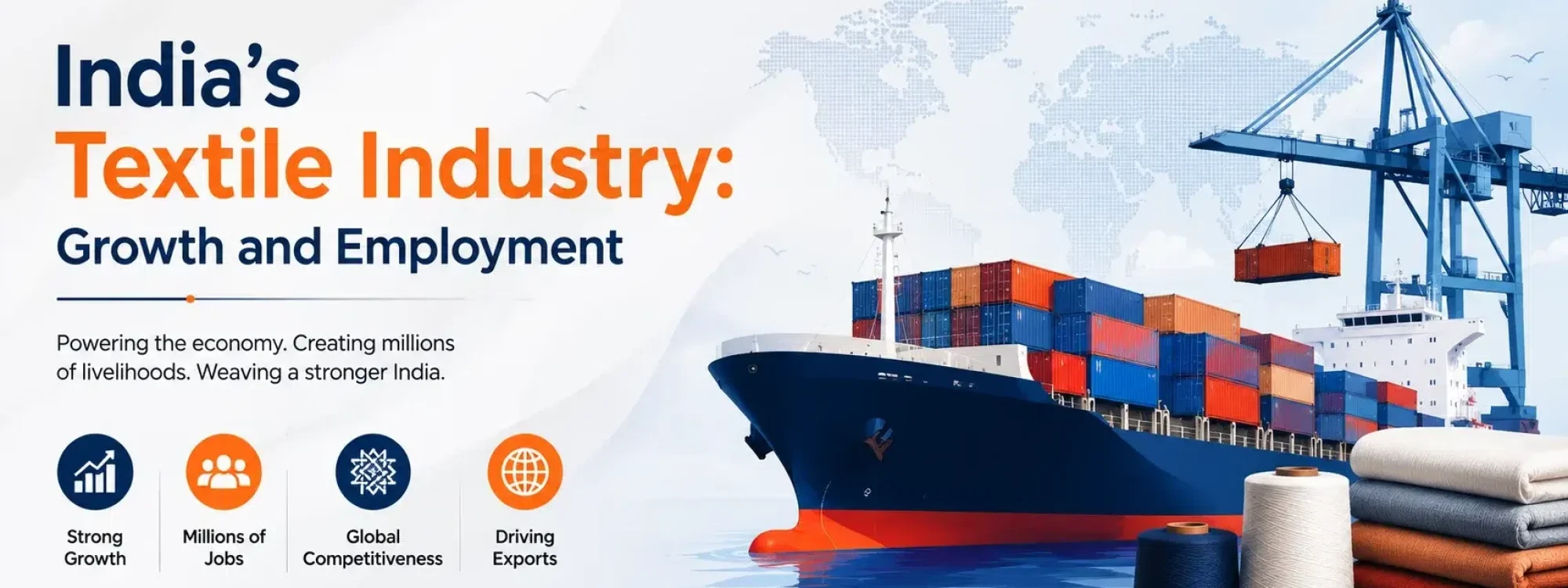
India’s Textile Industry Expands Its Global Reach
India’s textile sector plays a key role in the country’s economy. It supports exports, manufacturing, and employment. India’s Textile Industry Expands Its Global Reach as demand from international buyers grows for sustainable production, quality certifications, and transparent supply chains. The industry remains an important source of employment and export revenue, with recent government data showing that textile and apparel exports, including handicrafts, reached ₹2.69 lakh crore between April 2025 and January 2026.
India’s Textile Industry Continues to Grow
The sector has a strong base in cotton, silk, jute, and fibres. India also has a complete textile value chain, from spinning and weaving to processing and garment manufacturing.
The industry directly employs more than 45 million people. It also supports many jobs in rural and semi-urban areas.
Find out more about our textile shipping services here.👇
Key Strengths of India’s Textile Industry
India has several advantages that make it a strong destination for global textile buyers. A well-developed value chain, access to raw materials, skilled workers, and competitive production costs support the country’s textile industry.
- Complete Value Chain: India has capabilities across fibre production, spinning, weaving, processing, and garment manufacturing.
- Abundant Raw Materials: The country has strong access to cotton, silk, jute, and fibres.
- Skilled Workforce: Indian artisans and workers have long-standing expertise in weaving, dyeing, embroidery, and garment production.
- Competitive Costs: Local raw materials and competitive labour costs help manufacturers offer products at attractive prices.
- Quality Production: Indian manufacturers combine skilled labour with modern technology to produce textiles and garments that meet international quality requirements.standards. In essence, India has rich design patterns and has evolved them for centuries.
Conclusion
India can win global textile trust by focusing on two main areas: sustainable production and digital supply chains. Above all, to succeed at the highest level, the industry must adopt green energy. Alongside this, the Indian government ensures fair labour standards and uses smart tracking tools to meet strict international rules.
Most importantly, our skilled labourers use organic cotton, recycled fabrics, and clean water methods to meet buyer demands for safe products. On top of this, our quality controllers check products closely before shipping to reduce errors and build a strong reputation for reliability.
Falcon enhances trust in India’s textile exports by providing reliable, on-time shipping and streamlined, expert customs brokerage. In practice, their services offer comprehensive logistics support, including real-time tracking. To put this into perspective, we also offer flexible transport options and secure, quality-focused warehousing.